Chladnou zemí

(The Devil's Workshop)
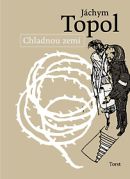

About the book

Original title Chladnou zemí
First published 2009
Publisher Torst, Prague
Pages 142
ISBN number 978-80-7215-365-7
Languages Czech, English, German, French, Italian, Dutch, Spanish, Polish and more


back to top

Rights sold to

Germany Suhrkamp Verlag - Berlin
The Netherlands Ambo Anthos Publishers - Amsterdam
Sweden Ersatz Publishers - Stockholm
Norway Bokvennen - Oslo
Slovenia Cankarjeva založba - Ljubljana
Hungary Kalligram - Budapest
Serbia Treci Trg - Belgrade
France Noir sur Blanc - Paris
Italy Zandonai - Rovereto
United Kingdom Portobello Books - London
Spain Lengua de Trapo - Madrid
Poland Foksal WAB- Warswaw
Belarus Lohvinau Literature House - Vilnius
Israel Achuzat Bayit - Tel Aviv
Bulgaria Paradoks - Sofia
Croatia V.B.Z. - Zagreb
Romania Editura Art - Bucharest
Ukraine Tempora - Kiev
Egypt Al Arabi - Cairo
Denmark Forlaget Silkefyret - Aarhus
Macedonia Magor Publishing - Skopje
Albania Fan Noli Publishing - Tirana
Russia Knizniki - Moscow
Greece World Books - Athens


back to top

A few words

A young boy grows up in Terezín - an infamous fortress town with a sinister past. Together with his friends he plays happily in this former Nazi prison, scouting the tunnels for fragments of history under the careful eye of one of its survivors, Uncle Lebo, until one day there is an accident, and he is forced to leave.

Returning to Terezín many years later, he joins Lebo's campaign to preserve the town, but before long the authorities impose a brutal crack-down, chaos ensues, and the narrator finds himself fleeing to Belarus, where fresh horrors drive him ever closer to the evils he had hoped to escape.

Bold, brilliant and blackly comic, The Devil's Workshop paints a deeply troubling portrait of two countries dealing with their ghosts and asks: at what point do we consign the past to history?

back to top

What the press says

The Independent Lucy Popescu
Blending fact and fiction, Topol's darkly comic novel, lucidly translated by Alex Zucker, is a hard-hitting exploration of two nations bedevilled by past horrors.

Irish Times Pól Ó Muirí
The Czech writer Jáchym Topol's novel is like a modern Dracula: full of Gothic horror that aims to frighten you to your senses and make you pay attention to history and its very real scars.


back to top

Excerpt

The Devil's Workshop

Translated from the Czech by Alex Zucker
© English translation Alex Zucker

My grandpa's from Košice, Sara said. All right, I thought. Slovakia's got railways and mobile phones, I'll start there. So I set out for Košice, and I took a look around there, at the stores and the cafés and the little shops on main street, and the waiting rooms at the station where it's probably the same hard wooden seats as seventy years ago. I wanted to work out what Eastern Europe really was, since we may look the same but culturally we're different. So where is the real East? I wondered. The Slovaks all told me I'd stopped too soon - Slovakia was Central Europe, not Eastern! Same as those stupid Czechs back there, sorry to say, not to mention the Hungarians, they aren't even really in Europe. Wouldn't go there if I were you, they won't understand a word you say, they explained at the information window at Bratislava station. Yes, they took pity on me, and when I insisted, they admitted that the real Eastern Europe was actually not far from Slovakia - of course I'd have to make it past the wolves and bears of Subcarpathian Rus. Ah, the Carpathians, Sara said. So you look at the map and off you go. But then the people in Subcarpathian Rus get mad when you ask if they're in the East. That's nonsense, they say, and send you packing to the real East, to Galicia! But the locals there, like all the Poles, say, This is Europe, not Eastern. This is the centre of Central Europe! And they wave their hand: You want the East? You've got to go to Ukraine, that's a fair way away. And they spit, bitterly and knowingly. Listen here, the East is poor and broken! People from the East go to the West to work, not the other way round! Sara said, spitting too. The Ukrainians send you farther still, to Russia. But the Russians don't think they're the East, to them that's an insult, seeing as they're the centre of the entire civilized world, though they do allow that the true East might be in Siberia, right. So I travel all the way through Siberia, thousands of kilometres on the Trans-Siberian Railway, and at the end station, in Vladivostok, I climb out, all broken-boned, and the locals there tell me, East, young lady, are you crazy? Why, this is the West, the honest-to-God end of the West, this is the end of Europe!

back to top